Columbia University research shows sun-grown cannabis produces richer terpene profiles and fewer degraded cannabinoids than indoor flower. Here's what the science says.
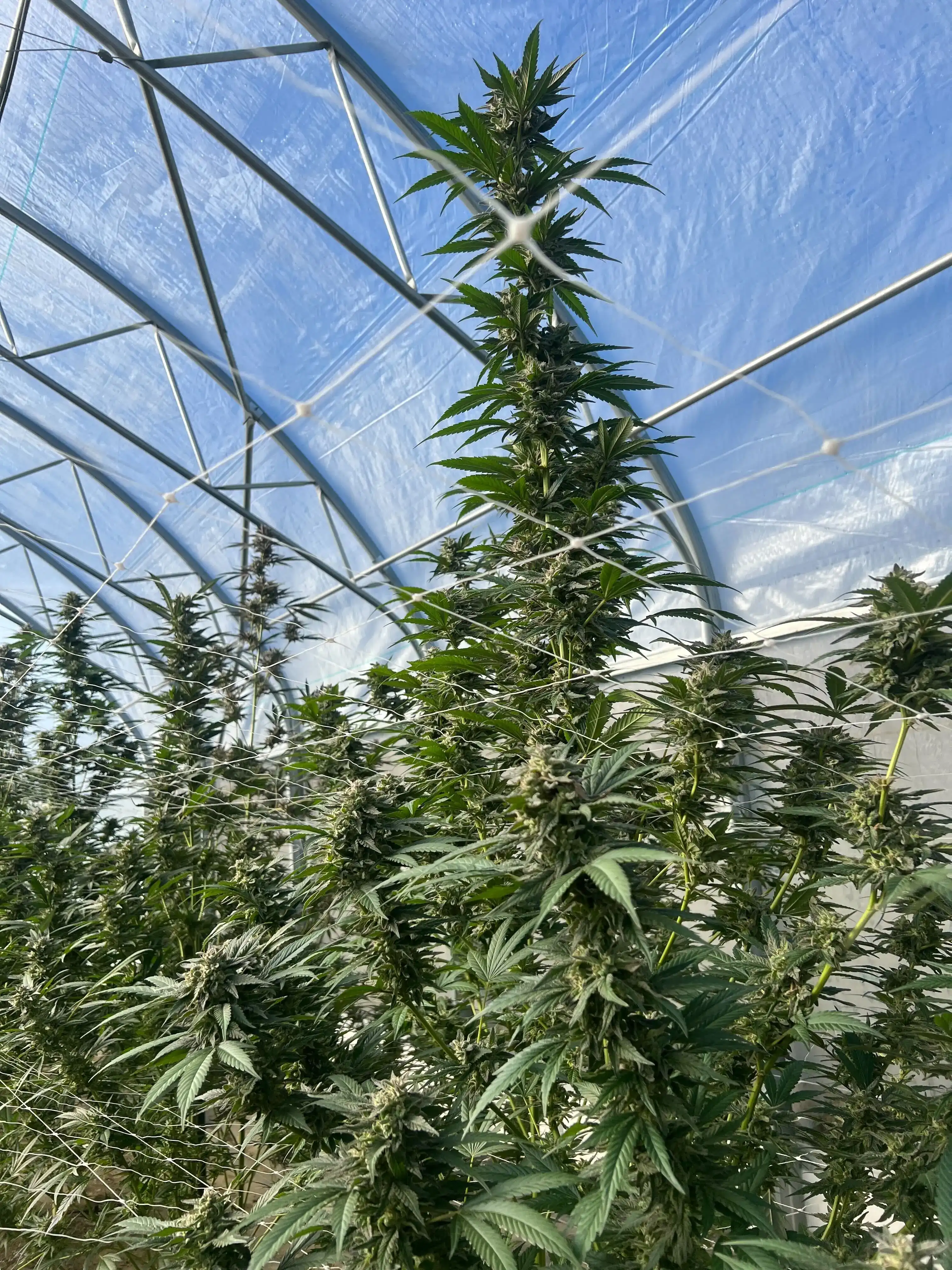
There's a question we hear often at the farm stand in Windsor: "Is outdoor cannabis as good as indoor?"
It's an understandable assumption—decades of prohibition pushed cultivation indoors, and the dense, visually perfect buds from controlled environments became the image of premium cannabis.
But the science tells a different story. Research from Columbia University demonstrates that sun-grown cannabis produces richer terpene profiles and fewer degraded cannabinoids than genetically identical plants raised under artificial lights. Meanwhile, environmental studies show indoor cultivation consumes energy equivalent to all other U.S. crop production combined.
For those of us cultivating cannabis under Vermont's sky, these findings confirm what we've known from working the land: natural light creates something artificial systems can't quite replicate.
What the Columbia Research Actually Found
The most rigorous scientific comparison comes from a 2023 peer-reviewed study published in Molecules by researchers at Columbia University's Department of Chemistry. They analyzed genetically identical plants from two varietals—Red Velvet and Cheetah Piss—grown under natural sunlight versus artificial indoor lighting.
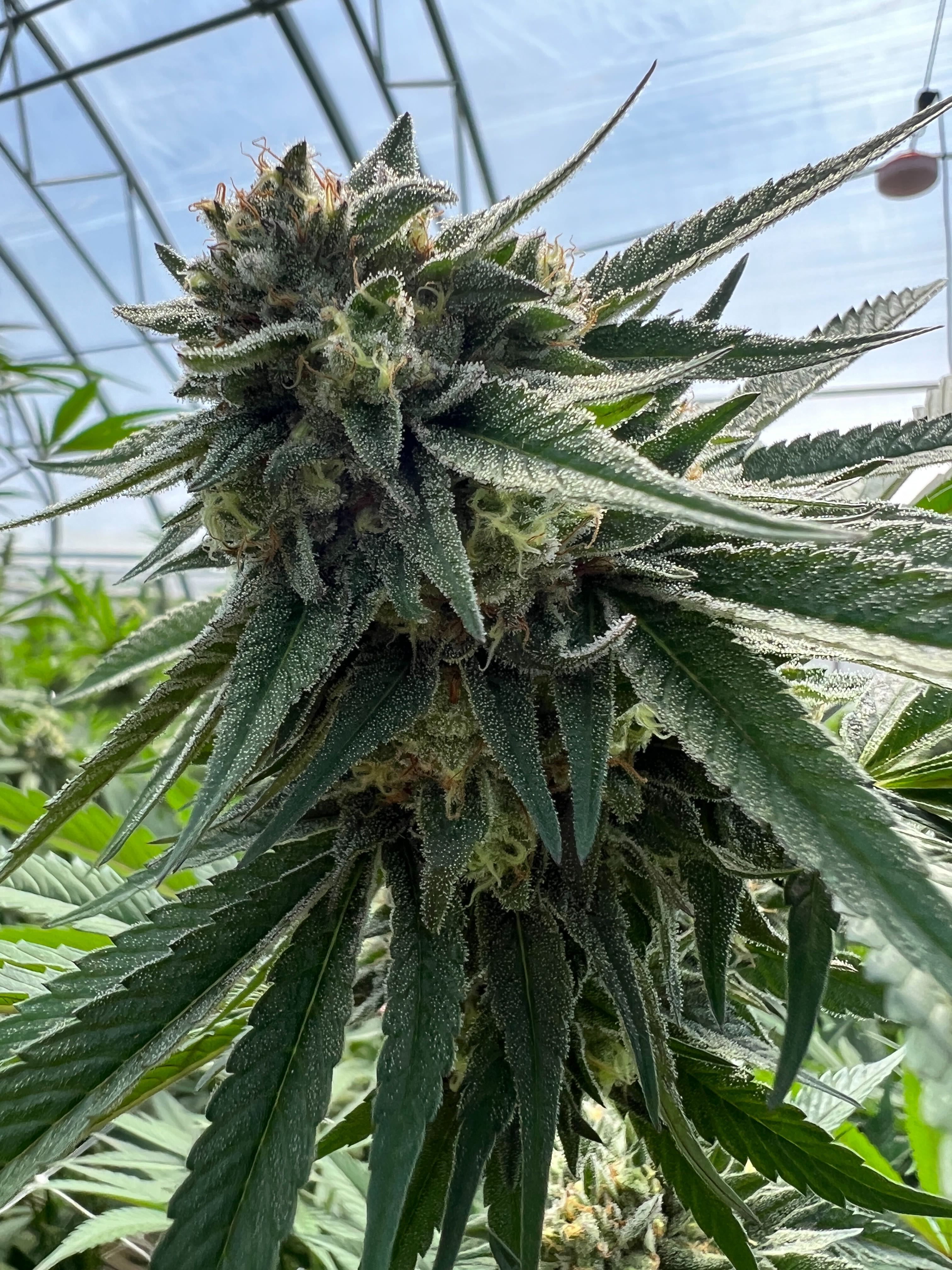
The outdoor samples contained significantly higher concentrations of key terpenes including β-caryophyllene, α-humulene, limonene, and β-myrcene. Some terpenes, like germacrene B, appeared only in sun-grown flowers. The researchers described outdoor flowers as "stickier to the touch and much more pungent" than their indoor counterparts.
Perhaps more interesting: indoor samples showed significantly more oxidized and degraded cannabinoids. The research team proposed that terpenes function as antioxidants within the plant. When indoor cultivation suppresses terpene production, cannabinoids lose their protective "oxidation shield." A separate study confirmed this relationship, finding that terpenes reduced cannabinoid degradation by nearly half in stability testing.
Primary cannabinoids like THCA and CBDA measured similarly between cultivation methods, but outdoor samples contained rare minor cannabinoids absent in indoor flowers—suggesting that full-spectrum sunlight enables plants to express their complete biochemical potential in ways artificial lighting cannot replicate.
This matters because the "entourage effect"—how cannabinoids and terpenes work together—determines how a particular varietal feels. A plant grown to express its full chemical complexity offers something different than one optimized for visual consistency.
The Environmental Reality of Indoor Cultivation
Vermont has a long tradition of sugar maple cultivation, dairy farming, and artisanal cheesemaking—agricultural practices shaped by working with the land rather than against it. Cannabis fits naturally into this framework when cultivated under the sun, but indoor cultivation represents something fundamentally different.
Dr. Evan Mills at Lawrence Berkeley National Laboratory documented indoor cannabis energy consumption in a foundational 2012 study. His finding that indoor cultivation uses approximately one percent of U.S. national electricity—about $6 billion annually—has been verified in subsequent research. His 2025 update reveals the footprint has grown substantially: 595 petajoules per year, generating greenhouse gas emissions equivalent to 10 million cars.
A lifecycle analysis by Colorado State University researchers quantified emissions at 2,283 to 5,184 kilograms of CO2-equivalent per kilogram of dried indoor flower—with HVAC systems contributing over 80 percent of emissions. By comparison, outdoor cultivation produces only 62 to 111 kilograms of CO2 per kilogram, making sun-grown cannabis approximately 50 times less carbon-intensive than indoor production.
The regional variations are striking: cannabis cultivation now accounts for three percent of California's electricity, four percent of Denver's total consumption, and 10 percent of Massachusetts' industrial electrical usage. Shifting cultivation outdoors could reduce industry emissions by up to 76 percent.
For a state like Vermont—with its commitment to clean energy and environmental stewardship—these numbers matter.
How Vermont's Regulations Support Craft Cultivation
Vermont designed its cannabis regulations to treat outdoor cultivation as traditional farming rather than industrial production. The Cannabis Control Board defines outdoor cultivation as "growing cannabis in a manner that does not use artificial lighting" and grants it unique legal protections—licensed outdoor operations are "regulated in the same manner as 'farming' and not as 'development' for permitting purposes." However, a May 2025 Vermont Supreme Court ruling narrowed the scope of this agricultural exemption, clarifying that municipalities may regulate aspects of outdoor cultivation beyond water-quality practices — a decision that remains actively contested by farming and cannabis advocacy groups.
The state's licensing structure reflects its small-farm philosophy. Vermont has issued nearly 400 cultivation licenses, with the majority for outdoor or mixed-use operations. Tier 1 outdoor licenses covering up to 1,000 square feet or 125 plants cost just $750 annually. CCB Chairman James Pepper has stated that supply-side policies "should really be targeted at those small cultivators—the small farmers and the social equity applicants."
This framework connects to Vermont's broader agricultural identity. Just as the state protects small maple producers and artisan cheesemakers from consolidation pressures, cannabis regulations favor farms over industrial facilities.
Vermont's climate—USDA zones 4a to 5b with a growing season from late May through early October—presents challenges including humidity and a compressed flowering window. But the state's nutrient-rich soils from centuries of agricultural use, clean air and water resources, and natural pest control from cold winters offer compensating advantages. Cultivators here focus on indica-dominant and quick-flowering varietals with mold resistance, harvesting during the relatively dry late September-October period when the Green Mountains show their color.
Vermont Farms Connect Cannabis to Craft Agriculture
Several Vermont sun-grown operations explicitly connect their practices to the state's artisanal agriculture heritage—industries that made Vermont synonymous with small-batch quality and terroir-driven products.
Sunset Lake Cannabis in South Hero became Vermont's first Climate Neutral Certified cannabis farm, offsetting over 100 tonnes of carbon. The farm uses living soil, integrated pest management, and inputs from neighboring operations—manure from a local dairy farm that supplies Ben & Jerry's, and spent grain from Two Heroes Brewery. Their philosophy captures the Vermont approach: "Farming is an outdoor activity. We're proud to let the Vermont sun do the work, it's better for the planet and better for the plant."
Rebel Grown in the Northeast Kingdom achieved distinction in 2024 as the first Sun+Earth Certified regenerative farm on the East Coast. Founder Dan Pomerantz trained in California's Emerald Triangle before bringing diversified organic practices to Vermont, incorporating Korean Natural Farming techniques and maple syrup tapped on-site into compost teas.
These operations share practices that define Vermont's cultivation philosophy: living soil systems without synthetic inputs, integrated pest management using natural predators, cover cropping with nitrogen-fixing clover, crop rotation to rest land between harvests, and hand-harvesting with attention to individual plants.
Where the "Indoor Is Better" Assumption Came From
The perception that indoor cannabis represents premium quality is a historical artifact, not an evidence-based assessment. When Ronald Reagan's War on Drugs intensified aerial surveillance in the 1980s, cannabis cultivation moved indoors to avoid detection. Over decades, indoor cultivators developed sophisticated environmental controls producing visually consistent, dense, trichome-covered buds that photograph well and appear uniform on dispensary shelves.
This "curated appearance" became conflated with quality, even though—as the Columbia study demonstrates—visual characteristics reflect growing environment and handling, not chemical composition or potency.
The market reflects this perception gap. Wholesale prices show indoor commanding $1,378 per pound versus $418 for outdoor—a more than threefold premium that contradicts scientific evidence showing outdoor flowers contain richer terpene profiles. This represents what industry advocates call "the craft premium paradox": sun-grown cannabis, despite requiring more skill to cultivate and producing demonstrably more complex chemical profiles, commands lower prices than controlled-environment production.
Rose Ojeda, Director of Oregon's Cannabis Growers Coalition, challenges this dynamic: "Sun-grown cannabis has a unique character and a more balanced cannabinoid profile. Growing outdoors allows plants to interact with their natural environment, which can help create a more potent and diverse set of compounds."
Cannabis Terroir Is Now Codified in Law
The concept of terroir—the French term encompassing how climate, soil, topography, and microbiome affect agricultural products—is now codified in cannabis law. California's Cannabis Appellations Program, which took effect in January 2022 as the first of its kind globally, allows cultivators to designate products by geographic origin, similar to wine's Champagne or Napa Valley designations.
Critically, the law requires appellation-designated cannabis be grown in the ground, under full sun, without artificial lights after flowering. Indoor cultivators attempted but failed to be included, ensuring appellations represent genuine terroir expression rather than mere geographic location.
The Sun+Earth Certified program, founded Earth Day 2019, establishes the regenerative organic standard for cannabis. Certified farms must grow under sunlight, in living soil, without synthetic chemicals, and pay workers fairly. The program has certified over 74 farms across the United States, with Vermont's Rebel Grown becoming the first East Coast recipient.
What Consumers Should Actually Look For
Several persistent misconceptions prevent consumers from recognizing sun-grown quality.
THC percentage doesn't equal quality. The complete cannabinoid-terpene profile creates the "entourage effect," making single-compound potency measurements misleading. A sun-grown flower with 18 percent THC and rich terpenes often provides more nuanced effects than indoor flower testing at 25 percent with limited terpene expression.
Dense, aesthetic buds don't indicate superior product. Visual characteristics reflect environment and handling, not chemical content or effects. Sun-grown flowers may look different—sometimes airier, with varied coloration from natural UV exposure—but these differences reflect terroir, not inferiority.
Indoor isn't inherently more potent. Independent testing shows similar potencies when best practices are used, with outdoor often producing higher overall cannabinoid profiles including beneficial minor cannabinoids.
Outdoor doesn't mean more contamination. Indoor grows often require more pesticides due to lack of natural pest predators. Vermont's cold winters provide natural pest control, and regenerative outdoor farms use integrated pest management rather than synthetic treatments.
The wine industry parallel is instructive: decades of consumer education transformed perceptions so that terroir-driven wines command premium prices over industrial production.
What This Means for Vermont Cannabis
Vermont's integration of cannabis into its craft agriculture tradition offers a model for the industry's sustainable future. Small-scale operations using regenerative practices, connected to place through terroir, and supported by regulations that treat cultivation as farming rather than industrial production.
The Columbia University research demonstrating superior terpene profiles and reduced cannabinoid degradation in outdoor flowers directly contradicts prohibition-era assumptions about indoor quality—assumptions now embedded in market pricing that disadvantages environmentally sustainable production.
For Vermont cultivators working the Connecticut River floodplain where it meets the Green Mountains foothills, these findings validate what experience already taught: that the same natural light that shapes maple sugar content and pasture grass also creates distinctive expression in cannabis flowers.
As the industry matures and consumer education improves, the 50-times carbon reduction available through outdoor cultivation may prove as valuable as the enhanced terpene profiles that make sun-grown flowers, in the words of Columbia researchers, "stickier to the touch and much more pungent" than their indoor counterparts.
Stop by the farm stand in Windsor sometime. We're happy to talk through varietals, share what we're cultivating this season, and explain how Vermont's summer sun shapes what ends up in those jars.
Frequently Asked Questions
Is outdoor cannabis as good as indoor cannabis?
The science suggests it's often better in specific ways. A 2023 Columbia University study found that sun-grown cannabis produces significantly richer terpene profiles than genetically identical indoor plants, including terpenes that appeared exclusively in outdoor-grown flower. Indoor cultivation tends to optimize for visual consistency; natural sunlight produces greater chemical complexity.
Why does sun-grown cannabis have more terpenes than indoor?
Full-spectrum sunlight stimulates secondary metabolite production in cannabis plants in ways artificial lighting can't fully replicate. The Columbia study found that terpenes also function as antioxidants that protect cannabinoids from degradation — when indoor cultivation suppresses terpene production, cannabinoids lose that protective buffer and break down at higher rates.
Does indoor cannabis have higher THC than outdoor?
Primary cannabinoids like THCA and CBDA measured similarly between cultivation methods in the Columbia research. Where outdoor cannabis differs is in minor cannabinoids and terpene expression — outdoor samples contained rare minor cannabinoids absent in indoor flowers, suggesting full-spectrum sunlight enables plants to express their complete biochemical potential.
How much energy does indoor cannabis cultivation use?
Research from Dr. Evan Mills at Lawrence Berkeley National Laboratory found that indoor cannabis cultivation consumes energy equivalent to all other U.S. crop production combined. A single kilogram of indoor cannabis generates roughly 4,600 kilograms of CO₂ equivalent. Sun-grown cultivation under Vermont's sky requires a fraction of that energy input.
What is the entourage effect and why does it matter for sun-grown cannabis?
The entourage effect describes how cannabinoids and terpenes work together to shape the overall experience of a particular varietal. A plant grown under natural conditions to express its full chemical complexity — more terpenes, more minor cannabinoids — offers a different experience than one optimized for visual consistency under artificial light. Sun-grown flower tends to carry more of that complete profile.
Does Vermont sun-grown cannabis look different from indoor flower?
The Columbia researchers described outdoor flowers as "stickier to the touch and much more pungent" than their indoor counterparts. Sun-grown buds are often less visually uniform than indoor — decades of indoor cultivation shaped consumer expectations around dense, visually perfect buds. But appearance is a poor proxy for chemical complexity or the experience a varietal delivers.