Vermont cannabis labels contain THC percentages, terpene profiles, batch numbers, and warning symbols required by the Cannabis Control Board. Here's how to read every line — and what actually matters for your experience.
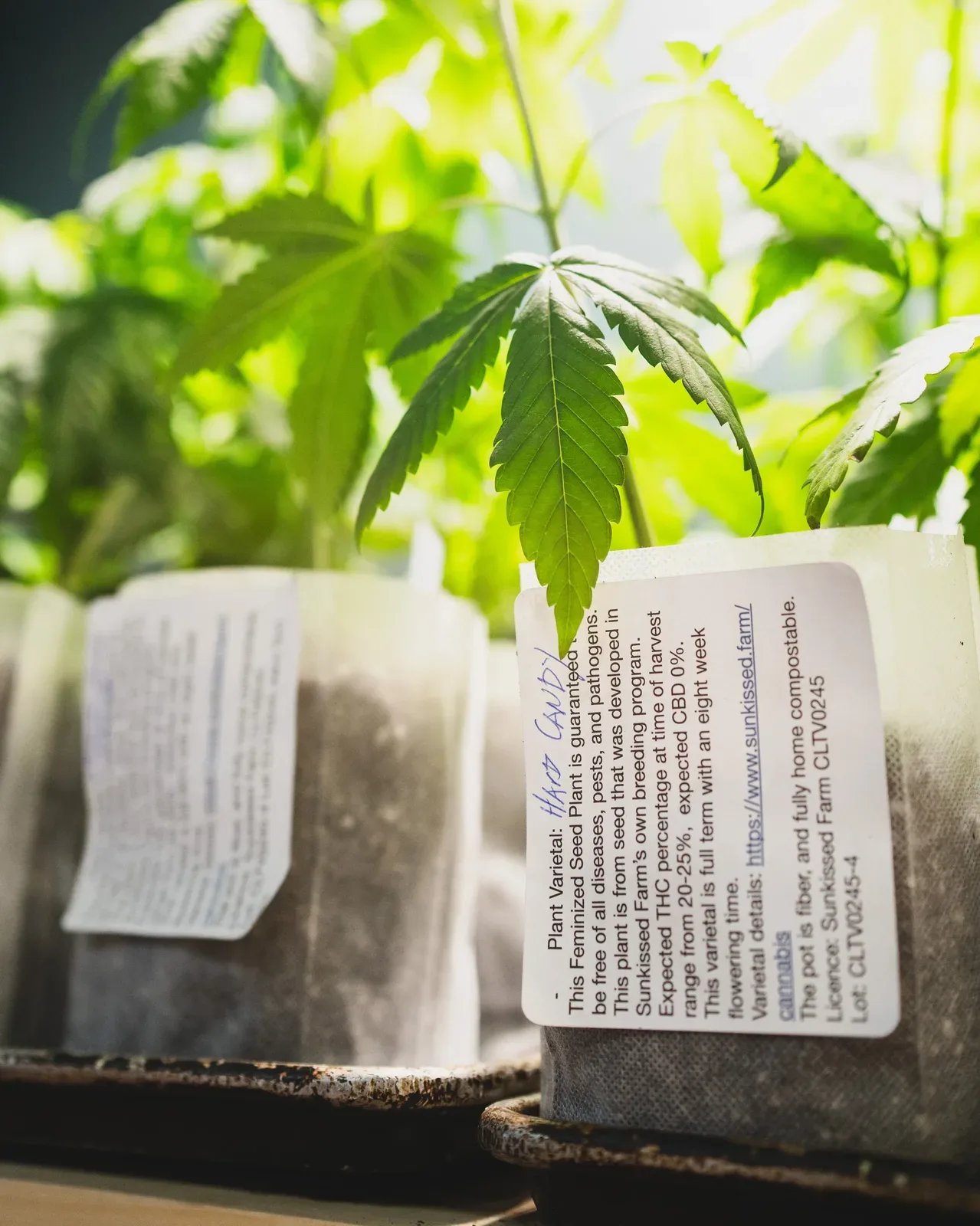
There's a lot of information on a Vermont cannabis label. More than most people expect, and more than most people know what to do with.
THC percentages. Terpene names you can't pronounce. Batch numbers. Warning symbols. Harvest dates. Cultivator license numbers. A black-and-yellow triangle with a cannabis leaf inside it. And somewhere in there, the information that actually helps you choose the right product.
Vermont's Cannabis Control Board requires more label transparency than many states. That's a good thing. But it's only useful if you know what you're looking at. This guide walks through every element of a Vermont cannabis label — what's required, what's optional, what matters for your experience, and what's mostly there for regulatory compliance.
The THC Number: What It Actually Means (and What It Doesn't)
The THC percentage is the first thing most people look at. It's also the most misunderstood number on the label.
Here's what you need to know: the THC percentage on a Vermont cannabis label represents total theoretical THC, not the amount of delta-9 THC sitting in the flower right now. This distinction matters.
Raw cannabis flower contains very little active delta-9 THC. What it contains is THC-A — tetrahydrocannabinolic acid — a non-psychoactive precursor. When you apply heat (smoking, vaporizing, baking), THC-A converts to delta-9 THC through a process called decarboxylation. But the conversion isn't perfectly efficient. Some molecular weight is lost when the acid group detaches.
Vermont calculates total theoretical THC using a standard formula adopted across most regulated markets:
Total THC = (THC-A × 0.877) + delta-9 THC
The 0.877 multiplier accounts for that molecular weight loss during decarboxylation — roughly 12.3 percent of the THC-A molecule is the acid group that gets released as carbon dioxide when heated. So when a label says 22% THC, that's a theoretical maximum assuming complete conversion, which rarely happens in practice.
Why this matters for consumers: the actual THC you experience depends on your consumption method. Vaporizing at precise temperatures converts more THC-A than a quickly smoked joint. Edibles undergo complete decarboxylation during cooking. The number on the label is a useful comparison tool between products, but it's not a precise prediction of what you'll feel.
Vermont caps flower THC at 30 percent for retail sale. Solid concentrates cannot exceed 60 percent. These aren't arbitrary limits — they reflect the Cannabis Control Board's approach to balancing consumer access with public health considerations.
And here's the thing experienced consumers already know: THC percentage alone is a poor predictor of experience quality. A flower testing at 18 percent with a rich terpene profile often produces a more nuanced, enjoyable experience than one at 28 percent with flat terpene expression. The industry's fixation on THC numbers mirrors the wine world's old fixation on alcohol percentage — it tells you something about intensity, but almost nothing about character.
Terpene Profiles: The Most Useful Information Most People Skip
If the THC number tells you the intensity, the terpene profile tells you the character. And in Vermont, terpene testing is required for all smokeable flower and vaporizable products offered for retail sale.
Terpenes are the aromatic compounds that give each cannabis varietal its distinctive smell and influence its effects. When you open a jar at the dispensary and inhale — that layered complexity of citrus, pine, earth, pepper — those are terpenes. They're not just about aroma. Research increasingly suggests terpenes interact with cannabinoids to shape the overall experience, a concept known as the entourage effect.
A Vermont cannabis label will list total terpene percentage and typically the three most prevalent terpenes by name. Here's what the common ones indicate:
Myrcene — Earthy, musky, slightly herbal. The most abundant terpene in cannabis. Research suggests it interacts with GABA receptors, promoting relaxation. Varietals with myrcene above 0.5 percent are often associated with sedating, body-heavy effects. If you're shopping for sleep or deep relaxation, this is the terpene to look for.
Limonene — Bright citrus aroma. Associated with mood elevation and stress relief. Varietals high in limonene tend to feel energizing and uplifting. Good for daytime use.
β-Caryophyllene — Peppery, spicy, woody. Unique among terpenes because it directly activates the CB2 cannabinoid receptor. Research has explored its anti-inflammatory properties. If a varietal smells like cracked black pepper, caryophyllene is likely dominant.
Linalool — Floral, lavender-like. The same terpene responsible for lavender's calming reputation. Associated with anxiety reduction and relaxation without heavy sedation. Often present alongside myrcene in sleep-oriented varietals.
α-Pinene — Sharp pine scent. Research suggests it may promote alertness and counteract some of THC's short-term memory effects. Dominant in varietals described as clear-headed.
Terpinolene — Complex: floral, herbal, slightly fruity. Less common as a dominant terpene. Varietals with terpinolene dominance are sometimes described as energizing, but individual responses vary.
Vermont law requires that total terpene content in inhalable products cannot exceed 10 percent by weight unless a manufacturer demonstrates the concentration was achieved naturally, not through added terpenes. This protects consumers from artificially boosted products. All terpenes added to a cannabis product must be naturally occurring in the cannabis plant — though they can be derived from non-cannabis botanical sources — and any added concentrated terpenes must be disclosed on the label.
Practical tip: When comparing two products of similar THC percentage, the terpene profile is what will actually differentiate your experience. Ask your budtender about terpenes, or learn to identify the aromas yourself. Over time, you'll develop preferences that are far more reliable than chasing THC numbers.
The "Contains THC" Warning Symbol
Every cannabis product sold in Vermont must display the state's universal warning symbol. As of July 2025, Vermont adopted the ASTM International standard symbol — a black-bordered yellow warning triangle containing a cannabis leaf silhouette, displayed above the words "CONTAINS THC."
This replaced the previous red-and-black version. Licensees can use remaining red-and-black labels until their stock is depleted or until January 1, 2027, whichever comes first. So you may see both versions on shelves during this transition period.
For edible products, the symbol must be at least 25 percent of the serving's height and width, and no smaller than 0.25 by 0.25 inches for single-serving items. The symbol must be visible on the outermost marketing-level layer of packaging — it can't be hidden inside or under a peel-away label.
The practical takeaway: this symbol exists so that anyone who encounters a cannabis product — including children, guests, or someone unfamiliar with the packaging — can immediately identify it as containing THC. It's a safety feature, not a marketing element.
Warning Labels and Health Statements
Vermont requires several mandatory warnings on cannabis packaging. Branded products must include:
"KEEP AWAY FROM CHILDREN AND PETS. DO NOT USE IF BREAST FEEDING."
And: "Cannabis can be habit forming and can impair concentration, coordination, and judgment. Do not operate a vehicle or machinery under the influence of cannabis. There may be health risks associated with consumption of cannabis."
Products containing multiple servings — common with edibles — must display an additional warning label in bolded text at a minimum of 10-point font in Times New Roman, Helvetica, or Arial. This warning must be prominently displayed on the outermost packaging layer.
Labels cannot contain false or misleading statements, therapeutic claims, or any statement that contradicts the health warnings. You won't see Vermont cannabis labeled as "cures anxiety" or "treats insomnia" — that would violate labeling rules. What you might see are terpene descriptions and general effect language that helps guide your selection without making medical claims.
Batch Numbers and Harvest Dates: Traceability Matters
Vermont requires seed-to-sale traceability for every cannabis product. This means the batch number on your label connects to a complete chain of documentation — from the cultivator who grew it, through testing, manufacturing (if applicable), and retail sale.
Under Act 56, passed in 2025, Vermont cannabis labels must now include both a harvest date and a packed-on date. This was specifically added to prevent misrepresentation of a product's age — a real concern in a market where freshness directly affects quality.
Why this matters practically: cannabis degrades over time. THC slowly converts to CBN (cannabinol, which has sedating properties). Terpenes evaporate. Moisture content changes. Flower that was harvested eight months ago will have a noticeably different profile than flower harvested last month. The harvest date tells you what you're actually getting.
If you see a batch number but can't find a harvest date, the product may have been packaged before the Act 56 requirement took effect. It's not necessarily a red flag, but it's worth asking your budtender about the product's age.
The Certificate of Analysis: The Full Picture Behind the Label
The label is a summary. The Certificate of Analysis (COA) is the evidence behind it.
A COA is a lab report from one of Vermont's licensed third-party testing laboratories documenting the complete chemical and safety profile of a specific batch. Vermont requires independent testing — the lab cannot be owned or controlled by the cannabis establishment whose products are being tested.
Every cannabis product sold in Vermont must be tested for:
Potency — Cannabinoid concentrations including THC, THC-A, CBD, CBD-A, and often minor cannabinoids like CBN and CBG. This is where the THC percentage on your label originates.
Pathogens — All smokeable flower must be tested for dangerous microorganisms. Flower that tests positive for aspergillus — a mold that can cause serious lung infections — cannot be sold as smokeable flower in Vermont. It may be remediated and retested, or diverted for extraction manufacturing.
Pesticides — Vermont tests for pesticide residues that could be harmful when inhaled or ingested. Products exceeding action limits cannot enter the market.
Heavy metals — Soils are tested every three years for metals like lead, arsenic, cadmium, and mercury. Cannabis is a bioaccumulator, meaning it absorbs heavy metals from its growing environment at higher rates than many other plants.
Water activity — Vermont moved from moisture testing to water activity testing, which is a more accurate measure of product stability and microbial risk. Lower water activity means longer shelf stability and less risk of mold development.
Not all dispensaries make COAs easy to access, but you have every right to ask for one. Some products include a QR code on the label that links directly to the lab results. If a dispensary can't produce a COA for a product on its shelf, that's worth noting.
What to look for on a COA: Verify the batch number matches your product. Check that all safety tests show "PASS." Look at the full cannabinoid profile beyond just THC — minor cannabinoids like CBG and CBN contribute to the overall experience. And check the terpene breakdown if available — it's the most detailed map of what your product will actually feel like.
Packaging Requirements: What Vermont Gets Right
Vermont has some of the most distinctive packaging requirements in the country.
Plastic packaging is prohibited for adult-use cannabis products. This isn't just an environmental gesture — it's codified in CCB Rule 2.2.9(b). The Board has granted limited waivers for specific gaskets, seals, and components necessary for child-resistance, but the default is plastic-free. Vermont is one of very few states with this restriction, reflecting the state's broader environmental values.
Cannabis products — meaning edibles, tinctures, concentrates, topicals, and vape cartridges — must be packaged in opaque, child-resistant containers. Cannabis flower, trim, and pre-rolls must be in child-deterrent packaging (a slightly lower standard than child-resistant) but does not need to be opaque.
Products cannot be designed in any manner likely to be appealing to minors or anyone under 21. This means no cartoons, no candy-mimicking designs, no imagery that could attract children. Vermont takes this seriously — it's a common reason for product registration rejection.
Labels also cannot claim the product is "organic." Because cannabis remains federally illegal, the USDA does not certify cannabis under its organic program. Even if a farm uses exclusively organic practices, the label cannot use that word. Some Vermont farms work around this through third-party certifications like Sun+Earth Certified, which verifies regenerative, sun-grown, chemical-free cultivation.
Edible-Specific Label Information
Edible cannabis products carry additional label requirements reflecting their unique dosing considerations:
Each package must state the number of servings and the THC content per serving. Vermont limits servings to 5 milligrams of THC maximum, with a 100-milligram package maximum (except for exempt products like tinctures and topicals). Each individual serving must be physically separated or clearly marked so consumers can easily measure their dose.
These limits matter. As we've discussed in our edibles guide, edible cannabis is metabolized differently than inhaled cannabis — your liver converts delta-9 THC into 11-hydroxy-THC, a metabolite that crosses the blood-brain barrier more efficiently and produces stronger, longer-lasting effects. Accurate serving information on the label is your most important safety tool with edibles.
Products containing meat or dairy are prohibited. Baked products containing dairy as an ingredient (butter, milk) are permitted — the prohibition applies to dairy products themselves, not dairy-containing baked goods.
What's NOT on the Label (and Why It Matters)
Some information you might want isn't required on Vermont cannabis labels:
Detailed terpene breakdowns — Labels must list total terpenes and the top three, but the full terpene profile may only appear on the COA. If you want the complete picture, ask for the lab results.
Growing method — Vermont doesn't require labels to specify whether cannabis was grown outdoors, indoors, or in a greenhouse. If growing method matters to you — and if you've read our articles on sun-grown cannabis, you know it should — you'll need to ask or look for certifications like Sun+Earth Certified.
Soil type or growing medium — Whether the cultivator uses living soil, hydroponic systems, or synthetic media isn't disclosed on the label. Again, ask.
Specific varietal genetics — While labels include a product name (which is usually the varietal name), there's no requirement to disclose genetic lineage. "Blue Dream" from one cultivator may have different genetics than "Blue Dream" from another. The terpene profile and COA are more reliable indicators of what you're actually getting than the varietal name alone.
How to Actually Use Label Information
Here's a practical framework for reading a Vermont cannabis label with purpose:
First, check the harvest date. Fresher is generally better for flower. Terpenes degrade over time. Anything harvested within the last three months is ideal; beyond six months, expect diminished aromatics.
Second, look at the terpene profile, not just THC. Identify the dominant terpene and match it to your desired experience. Myrcene for relaxation or sleep. Limonene for mood elevation. Caryophyllene if you're interested in the anti-inflammatory research. Pinene for alert, clear-headed effects.
Third, use THC percentage as a rough intensity guide, not a quality indicator. If you're newer to cannabis, stay in the 15-20 percent range. If you have experience and know your tolerance, higher percentages are available. But the number alone doesn't predict enjoyment.
Fourth, verify with the COA when possible. If a product seems off — smells different than expected, or the effects don't match the label — comparing the COA to the label can reveal discrepancies. A 2021 study in the Journal of the American Medical Association found nearly 70 percent of CBD products had inaccurate potency labeling. Vermont's regulated market and mandatory third-party testing reduce this risk significantly, but verification is always smart.
Fifth, track what works for you. Keep notes — even casual ones — connecting specific terpene profiles and cannabinoid ratios to your experiences. Over time, patterns emerge that are far more useful than any label data in isolation. "High myrcene products help me sleep" is worth more than any dispensary recommendation.
Vermont's Labeling Philosophy
Vermont's label requirements reflect the state's broader approach to cannabis regulation: treat it as a legitimate agricultural product, protect consumers with transparency, and maintain standards that build public trust in a newly legal market.
The harvest date requirement, the plastic packaging ban, the prohibition on therapeutic claims, the mandatory independent testing — these aren't bureaucratic hurdles. They're the framework that separates a regulated market from the unregulated one it replaced.
When you pick up a cannabis product at a licensed Vermont dispensary, the label represents a chain of accountability stretching from cultivator through testing lab to retailer. Every number, every symbol, every line of fine print connects to documentation you can verify.
That's worth understanding. And it's worth supporting.
If you have questions about reading labels — or want to see what the COA looks like for what we grow — stop by the dispensary in Woodstock. We keep lab results accessible and we're happy to walk through them with you. It's the kind of conversation we think matters.
Sunkissed Farm is at 4374 West Woodstock Road in Woodstock, Vermont. Open seven days a week. Questions? hello@sunkissed.farm or 802-222-6920.
Resources
Vermont Cannabis Control Board, Product Labeling and Registration Guidance (2025)
Vermont Cannabis Control Board, Testing Action Limits and Parameters Guidance (2025)
Vermont Cannabis Control Board, POS Flyers and Warning Labels
Vermont General Assembly, Act 56 (2025) — Cannabis Labeling Amendments
Network for Public Health Law, THC Limits for Adult-Use Cannabis Products
Frequently Asked Questions
What does the THC percentage on a cannabis label actually mean?
The THC percentage represents total theoretical THC — a calculation combining the THC-A content (multiplied by 0.877 to account for molecular weight loss during decarboxylation) with any delta-9 THC already present. It's the maximum THC you could experience assuming complete conversion through heating. The actual THC you consume depends on your method — vaporizing converts more efficiently than smoking, while edibles undergo complete decarboxylation during cooking.
Why do some cannabis labels show both THC and THC-A?
THC-A is the non-psychoactive acid form naturally present in raw cannabis flower. It converts to active delta-9 THC only when heated. Labels showing both numbers give you a more complete picture: the delta-9 THC is immediately active, while the THC-A represents potential THC after decarboxylation. The total theoretical THC calculation combines them. If you see THC at 1% and THC-A at 24%, the total theoretical THC is roughly 22% — that's the number most consumers compare.
What are terpenes and why are they listed on Vermont cannabis labels?
Terpenes are aromatic compounds that give each cannabis varietal its distinctive smell and influence its effects. Vermont requires terpene testing for smokeable flower and vaporizable products, and labels must list total terpene percentage and the top three most prevalent terpenes. They're arguably more useful than THC percentage for predicting your experience — myrcene promotes relaxation, limonene elevates mood, caryophyllene has anti-inflammatory properties, and linalool reduces anxiety.
What is a Certificate of Analysis (COA) and how do I get one?
A COA is a lab report from a licensed third-party testing laboratory documenting a product's complete chemical profile and safety test results. It includes detailed cannabinoid concentrations, terpene breakdowns, and results for pathogen, pesticide, heavy metal, and water activity testing. Some products include a QR code on the label linking to the COA. You can also ask your dispensary — they're required to have COAs for every product on their shelves.
What does the yellow triangle symbol on cannabis packaging mean?
The yellow triangle containing a cannabis leaf silhouette is Vermont's universal warning symbol indicating the product contains THC. As of July 2025, Vermont adopted the ASTM International standard symbol in black and yellow, replacing the previous red-and-black version. Both versions may appear on shelves during the transition period through January 2027. It's a safety feature ensuring anyone who encounters the product can immediately identify it as cannabis.
Why does Vermont ban plastic cannabis packaging?
Vermont prohibits plastic packaging for adult-use cannabis products under CCB Rule 2.2.9(b), reflecting the state's environmental values. Limited waivers exist for specific components like gaskets and seals needed for child-resistant closures, but the default is plastic-free. Vermont is one of the few states with this restriction, requiring licensees to use glass, metal, or paper-based packaging alternatives.